



A label is more than just a tag. It is a mark of quality and credibility. It is the first and last impression that your product makes. But as most labels tend to disappear or peel off, that promise begins to fade and the best equipment will be seen as being neglected. This is the reason why the business owners are opting for metallic labels to secure the identity of their brand. These labels remain vibrant, clean, and well secured for a long time, so that your product does not fail to comply with government regulations and appears high-quality throughout its lifespan.
Whether you are a manufacturer, exporter or a brand owner, this blog will be very useful for you:
- Life Span: The ability of metal to resist the most challenging weather conditions in India.
- Compliance: Metallic labels are the simplest to adhere to strict marking laws.
- Impact: The role of a quality label in developing long-lasting trust with your buyers.
Prakash Labels works closely with Indian manufacturers and exporters who face these exact challenges every day, labels failing under heat, moisture, and long-term use. This experience has shown us why metallic labels are increasingly becoming the preferred choice across industries.
In this article, we will break down all the details you need to know about the type of label your product needs. We will cover the following:
- What metallic labels are
- Which types of labels work best in Indian conditions
- Which label is suitable for the type of industry
- How to choose the right option without overspending
What Are Metallic Labels?
Metallic labels are labels manufactured with metal or with materials that resemble metal, like aluminium, stainless steel, brass, or metallic foils. Unlike paper or plastic labels that fall apart in harsh conditions, these labels can handle extreme conditions without fading, peeling, or tearing.
In India, these labels are commonly used for:
- Machine name-plates
- Electrical and control panels
- Industrial equipment identification
- Product branding and premium packaging
- Asset tracking and compliance marking
Depending on the requirement, they can be rigid metal plates or flexible adhesive-backed labels with a metallic finish.
Why Metallic Labels Make Sense in the Indian Market
Indian operating conditions are demanding. High temperatures, dust, humidity, oil exposure, and rough handling are everyday realities in factories and warehouses.
This is why metallic labels are preferred over paper or standard plastic options. If your labels face heat, dust, or moisture, this section applies directly to you.
1. Built for Indian Weather:
India’s climate and manufacturing conditions are an ultimate test for any tag. Metal labels are designed to remain entirely intangible for years, as they resist:
- Extreme Heat: No warping or peeling near high-heat equipment.
- Monsoon Moisture: They are rust-free and will not break down with tropical moisture.
- Manufacturing Wear: They hold up to the dust, dirt, and friction that is constant in factories.
- UV and Light Resistance: The text is sharp and clear, even with bright exposure, and will not fade under UV lights.
In our projects at Prakash Labels, we regularly see anodised aluminium labels outperform plastic alternatives in high-heat factories and outdoor installations across India.
2. Professional & Premium Appearance:
For Indian brands that export or deal in premium products, looks matter to them. Metallic finishes instantly represent quality, trust and credibility. That’s why there are metallic labels in industries such as cosmetics, electronics, appliances, and luxury goods.
3. Long-Term Cost Efficiency:
Metallic labels have a much longer lifespan as compared to other types of labels, but they may have a higher initial cost. However, they offset the cost by reducing the need to replace, reprint, and maintain labels. They’re generally considered the most cost-effective option in the long run.
Comparison Between Plastic Labels vs. Metallic Labels
| Feature | Plastic Labels | Metallic Labels |
| Lifespan | 1–2 years (tends to peel or fade) | 10–20+ years (stays intact) |
| Heat Resistance | Melts above 80°C | Withstands up to 500°C |
| Compliance | Information can fade, risking legal fines | Engraved data stays readable forever |
| Surface Prep | Needs a perfectly smooth surface | Can be screwed onto rough surfaces |
| Initial Cost | Low / Budget-friendly | Higher / Premium investment |
| Long-Term Value | Expensive due to frequent replacements | Highly Cost-Effective (buy once, stays forever) |
Recently, a Pune-based company manufacturing electrical panels partnered with Prakash Labels and shifted from conventional plastic stickers to metallic labels. They saved over 60% on the cost of replacing their labels and were able to stop constant maintenance by using anodised aluminium labels in only two years.
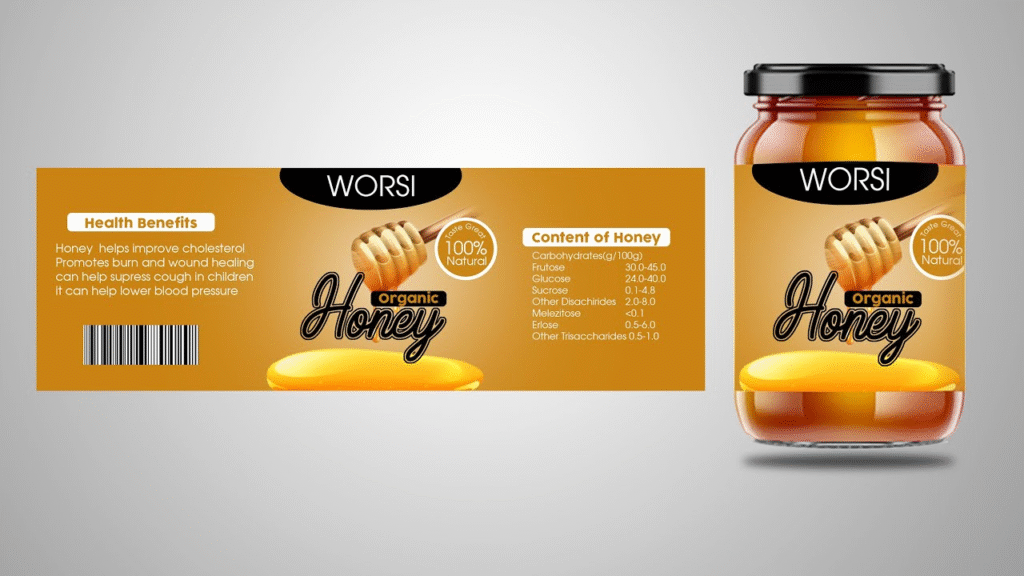
Types of Metallic Labels Commonly Used in India
1. Anodized Aluminium Labels
Why are they popular:
- Lightweight
- Corrosion-resistant
- Long-lasting
- Excellent for industrial and outdoor use
They are commonly seen on:
- Machinery
- Solar panels
- Electrical equipment
- Control panels
2. Stainless Steel & Brass Labels
Mostly used where durability and strength are important.
Ideal for:
- Heavy machinery
- Construction equipment
- Elevators
- Industrial infrastructure projects
They are expensive compared to others, but they also last the longest.
3. Metallic Stickers (Foil-Based)
These are adhesive-backed labels with a metallic finish rather than solid metal.
They work well for:
This category also includes gold foil stickers, which are extremely popular in Indian premium packaging.
Gold Foil Stickers in Indian Branding
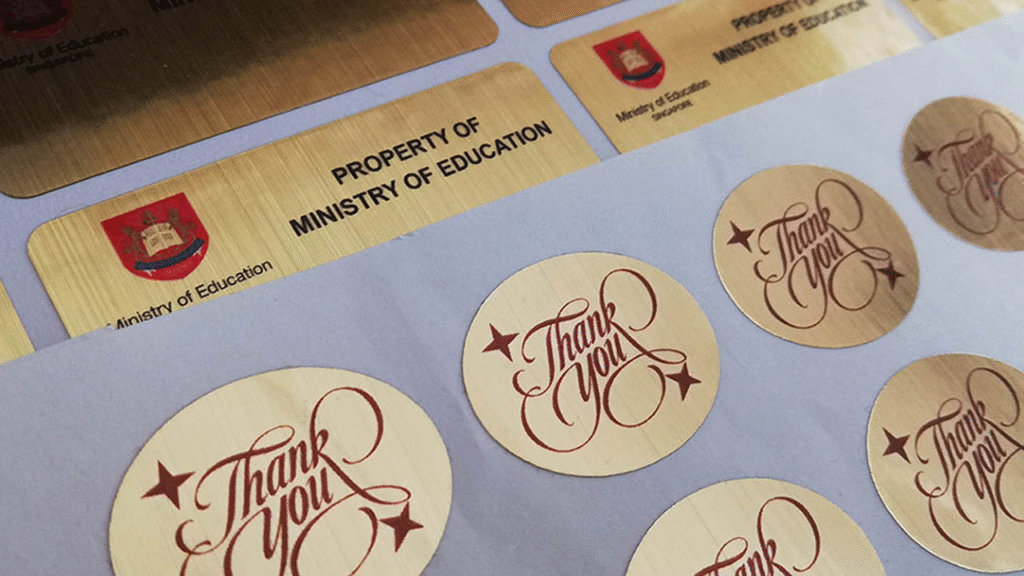
Premium packaging often starts with premium labeling. In India, gold is associated with quality, celebration, and value. That’s why gold foil stickers are widely used in:
- Cosmetics
- Perfumes
- Gourmet food products
- Festive and wedding packaging
At Prakash Labels, gold foil stickers are commonly used by cosmetics and FMCG brands looking to elevate packaging without moving to solid metal nameplates.
Metal Barcode Tags & Asset Identification
In the case of factories, warehouses, hospitals, and power plants, durability is not an option. Where durability is essential, metal barcode tags are implemented, be it on high-heat assembly lines or on coastal shipping yards. Unlike paper barcodes, metal tags remain scannable even after years of wear, cleaning, and exposure to chemicals.
They are commonly used for:
- Asset tracking
- Inventory management
- Equipment identification
- Maintenance records
Most metal barcode tags are either laser-engraved or anodised for permanent readability.
How Metallic Labels Are Manufactured
Understanding the process of how these metallic labels are manufactured helps you make better buying decisions.
- Laser Engraving
- Permanent and tamper-resistant
- Ideal for serial numbers and barcodes
- Best for long-term identification
- Anodizing
- Graphics are sealed into aluminium
- Corrosion resistant and fade proof
- Perfect for outdoor and industrial use
- Screen Printing on Metal
- Cost-effective for bulk orders
- Suitable for logos and colour-coded information
- Foil Stamping
- Used mainly for metallic stickers
- Creates shiny, embossed finishes
- Popular for premium packaging
Cost Factors for Metallic Labels in India
The cost of metallic labels depends on several factors:
- Material used (aluminium, steel, brass, foil)
- Quantity ordered
- Printing or engraving method
- Size and thickness
- Level of customisation
General Cost Insight:
- Metallic stickers & foils → Budget-friendly
- Anodized aluminium labels → Mid-range
- Stainless steel or brass plates → Premium
For most Indian businesses, anodized aluminium offers the best balance between cost and durability.
Sustainability & Long-Term Value
Metal labels are not disposable branding elements.
- Aluminium is recyclable
- Longer lifespan reduces waste
- Fewer replacements lower environmental impact
For Indian companies moving towards responsible manufacturing, metallic labelling supports sustainability goals while maintaining quality. At Prakash Labels, sustainability is approached through material choice and longevity, designing metallic labels that last longer, reduce waste, and support responsible manufacturing practices.
For Indian businesses, metallic labels are more than a visual upgrade; they are a long-term investment. They help:
- Protect brand credibility
- Ensure compliance
- Improve asset management
- Enhance product value
When chosen correctly, metallic labels often outlast the product they are attached to, and that alone makes them worth considering.
FAQs
1. Are metallic labels suitable for Indian weather conditions?
Yes, metallic labels are designed to withstand heat, humidity, dust, and outdoor exposure, making them ideal for Indian factories, warehouses, and outdoor installations.
2. What is the difference between metallic stickers and metal nameplates?
Metallic stickers are flexible, adhesive-backed labels with a metallic finish, while metal nameplates are rigid plates made from aluminium or steel for permanent industrial use.
3. Can metallic labels be used for barcodes and serial numbers?
Yes, Metal barcode tags are widely used in India for asset tracking because they remain scannable even after long-term wear and cleaning.
4. Are gold foil stickers durable enough for product packaging?
Yes, gold foil stickers work well for packaging and branding, but they are best suited for decorative and indoor use rather than heavy industrial environments.
5. Are metallic labels expensive compared to paper labels?
They cost more initially, but metallic labels last significantly longer, reducing replacement costs and offering better value over time.
6. Which industries in India commonly use metallic labels?
Manufacturing, electrical, electronics, automotive, cosmetics, FMCG, pharmaceuticals, logistics, and export-oriented businesses widely use metallic labels for durability and branding.